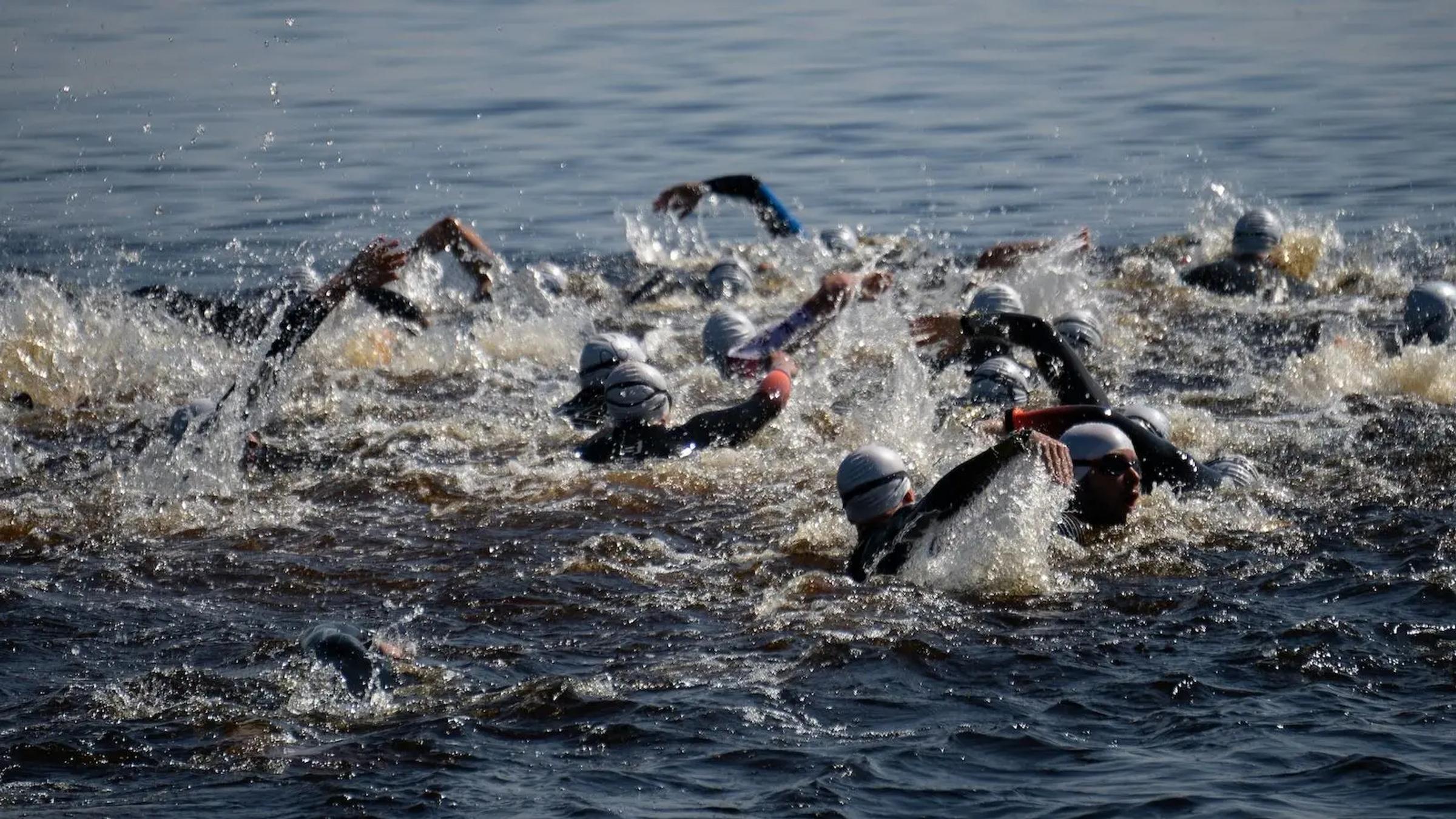
IRONMAN 70.3 Maine 2027
The fastest swim in the world. Then you pay for it.
- Sun 25 July 2027
- Augusta, Maine
- 70.3 miles · 1.2 miles / 56 miles / 13.1 miles
A downstream Kennebec River swim that athletes have finished in under 20 minutes, a single-loop bike through the Kennebec Valley with more than 3,000 feet of climbing, and a river-trail run to a finish beside the Maine State House. Coached start to finish by Matt Chin.
20-week coached programme · starts 8 March
Coached by Matt Chin
Written and reviewed by Matt Chin, IRONMAN Certified Coach. Last reviewed 6 October 2026
Key facts
- Swim
- 1.2 miles
Kennebec River, point-to-point, downstream, current-assisted. Voted the fastest 70.3 swim course in the world by athletes in 2023.
- Bike
- 56 miles
Bike elevation figures range from 3,100 to 3,800 feet. Athlete devices record up to 4,000. Hilly.
- Run
- 13.1 miles
Mostly flat rail trail with one 0.6-mile climb near mile 10 to 11.


- 5 - 7 hours
- Median finish time
- 2,000 - 2,100
- Field size
- 20
- Total coached weeks
At a glance
IRONMAN 70.3 Maine is a half-distance triathlon held on the last Sunday of July in Augusta, Maine's capital, after moving from Old Orchard Beach in 2022. The 1.1 mile swim is point-to-point downstream in the Kennebec River and was voted the fastest 70.3 swim course in the world by athletes in 2023. The 56 mile bike is a single loop through the Kennebec Valley with published climbing figures of 3,100 to 3,800 feet. The 13.1 km run follows the Kennebec River Rail Trail through Hallowell and Augusta, finishing near the Maine State House. Around 2,000 athletes finish each year, and the race sold out in 2024 and 2025.
Maine is the right race if the swim scares you and the hills do not
You are somewhere between forty and sixty. You run something. You have let the fitness go and you have decided to take it back, in public, with a date on it. Maine is a good race for that decision, for four reasons and one honest caveat.
The swim removes the fear
For most athletes new to triathlon, the swim is what keeps them from entering. Maine's is downstream in the Kennebec, with the current behind you the whole way. In 2023, the professionals swam faster than 50 seconds per 100 metres; age-group athletes regularly report 16 to 35 minutes for 1.9 km, and more than one has said it felt like cheating. You will come out of the water ahead of your own expectations, and that changes the rest of the day.
The date is kind to a beginner
The last Sunday in July means the preseason runs through the New England winter indoors, and the hard work happens in May and June in daylight. If you live in the Northeast, it is a drive.
It is a small, well-run race in a town that wants you there
Augusta closes its roads, throws a welcome party with fireworks over the river on Friday, and turns out 700 volunteers. Athletes rate the organisation highly, and finishing beside the State House is one of the more distinctive moments in the series.
It is scenic
Rural Maine in July: farmland, tree-lined roads, a river trail through two historic towns. The family angle writes itself.
The caveat is the bike
Published climbing figures range from 3,100 to 3,800 feet, and athletes' devices often record more. That is roughly 50 per cent more climbing than Chattanooga and ten times Eagleman. It is not Lake Placid, but it is not the flat holiday race the swim suggests. If you are willing to train for hills, Maine is one of the best first 70.3s in the Northeast. If you want flat and fast, look at Eagleman. How 70.3 training fits around a full diary.
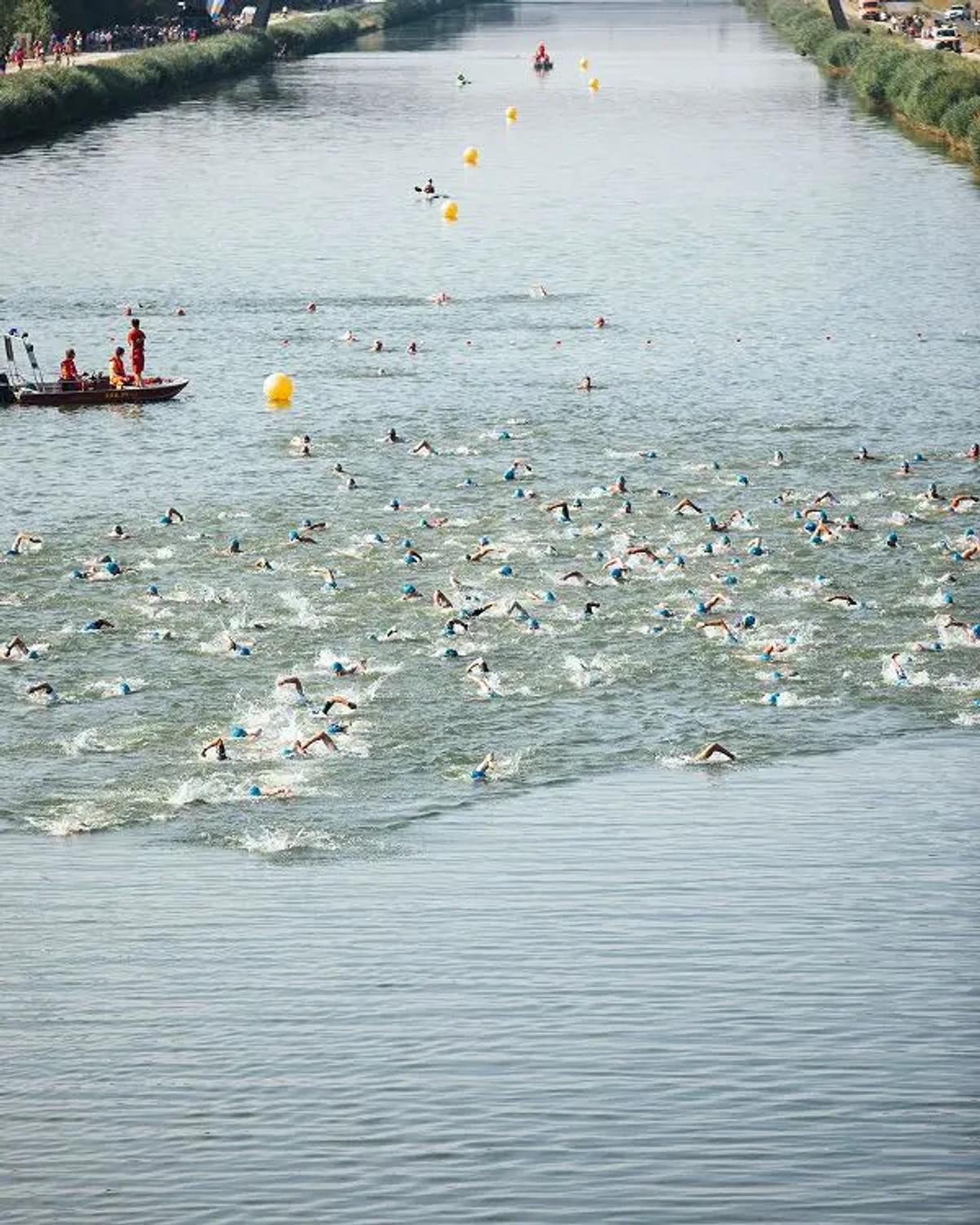
The Swim — 1.2 miles, Kennebec River, downstream
You start below Bridge Street in downtown Augusta in a self-seeded rolling start, a few athletes at a time, from about 6 am, and swim straight down the river to floating docks near Capital Park. The water is dark, visibility is low, and none of that matters, because the river does most of the work. The swim start is about a mile from transition, so race-morning logistics matter: you rack your bike, then walk or shuttle to the start.
The current is the story. How much it helps depends on rainfall in the days before. In 2023, after heavy rain, the professionals could not swim upstream to the first buoy in warm-up, and the age-group field came out of the water in times that would be personal bests anywhere else. In a drier year it is still fast, only less absurdly so. Athletes report anything from 16 to 35 minutes.
The wetsuit call is borderline. The Kennebec in late July is warm for Maine: 74 to 75°F. In 2023 it was 73.9°F and wetsuits were legal. In 2025, the call went the other way, and the race was non-wetsuit, which surprised a lot of athletes who had only trained in neoprene. Bring a wetsuit and a swimskin, and be comfortable in both.
After the swim. There is a walk from the swim exit to transition, reported at around 0.4 miles, on a surface you will do barefoot. Practise it in your head; it costs athletes a couple of minutes and some composure if it surprises them.
What that means for how we train you
A current-assisted swim rewards sighting and body position more than raw power. Your swim block builds a straight line, a relaxed stroke, and comfort breathing to both sides in dark water. From May, we swim in open water in both a wetsuit and a swimskin so race morning holds no surprises. If open water is new to you, start with our guide to open-water swimming for nervous beginners.
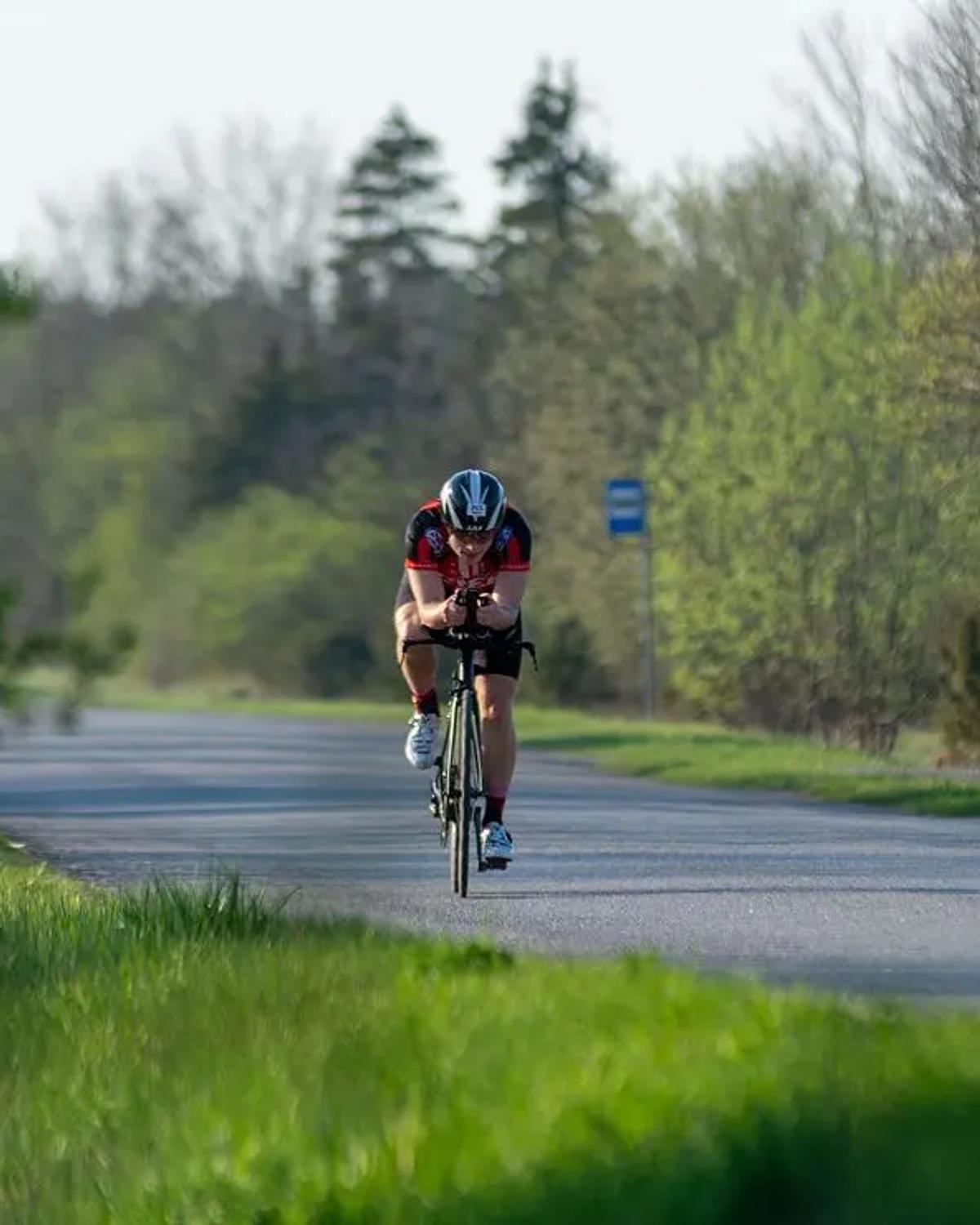
The Bike — 56 miles through the Kennebec Valley
One loop out of Augusta and through the river towns of the Kennebec Valley: Chelsea, Randolph, Pittston, Dresden, Richmond, West Gardiner, Gardiner, Farmingdale and Hallowell, returning past the State Capitol in the final mile. Published climbing figures range from 3,100 to 3,800 feet, and athletes' GPS devices have recorded 3,600 to 4,100. Take the higher figure seriously.
It is rolling, fast and technical. There are significant climbs at around miles 3, 10 and 21, the last at a bridge crossing, and a short pitch reported at about 12 per cent near mile 44. The descents are the other half of the story: 30 mph and more on swooping rural roads, some with rough patches. The 2025 runner-up called it the toughest and most technical course he had ridden. He was a professional; for you, the lesson is that this bike needs gearing, bike-handling and pacing, not one of the three.
That is also why the race is fair. The swim gives everyone twenty minutes. The bike takes back time from anyone who hasn't prepared, which is why finish times at Maine aren't as fast as the swim would suggest.
You can ride the official course on ROUVY through the winter, which is worth doing for the descents as much as the climbs.
What that means for how we train you
Maine is a strength-endurance course. The work is climbing at a controlled effort, descending with confidence, and holding your number on the flat sections in between. We fit a compact chainset with a 32 or 34 sprocket if you don't have one, build hill repeats into the programme from April, and put you on real outdoor descents from May. The same logic applies to how we set your heart-rate zones.
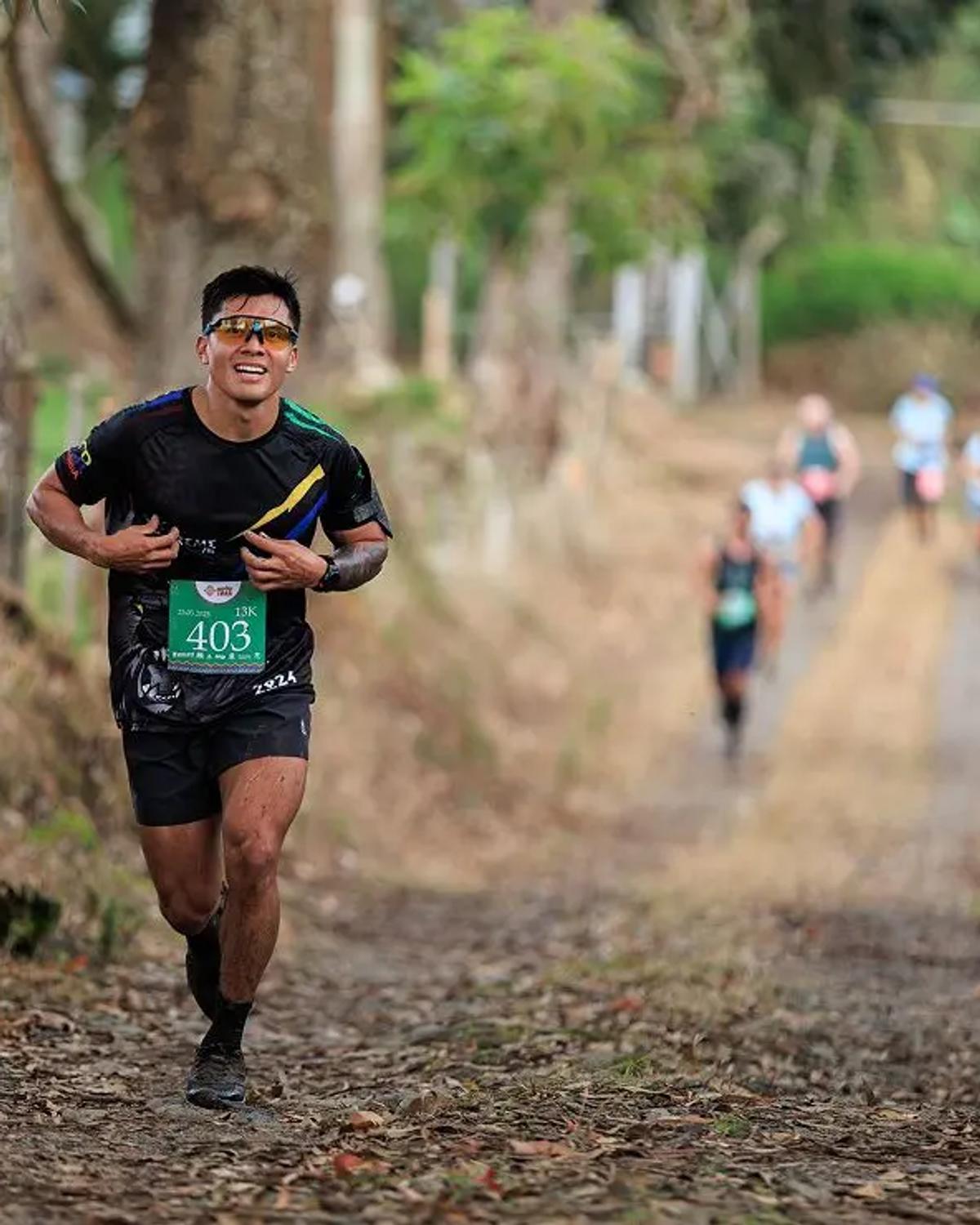
The Run — 13.1 miles, Kennebec River Rail Trail, Hallowell and Augusta
An out-and-back along the Kennebec River Rail Trail through historic Hallowell and Augusta, finishing near the Maine State House. Mostly flat, on trail and road, with the river beside you for much of it. The first half is partly shaded; the second half is more exposed, and by then it is early afternoon.
The climb is late. A hill of about 0.6 miles sits around mile 10 to 11, where the course sends its invoice. Athletes who rode the descents hard and the climbs harder walk this hill. Athletes who rode to plan run it.
The weather is the wildcard. July in Augusta averages a high of 80°F, with cool mornings around 59°F. Most years the run is warm rather than hot. Some years, 2023 included, the afternoon is hot and sunny, and a shadeless second half in 86°C is a different race. We train for the warm version and plan for the hot one.
What that means for how we train you
Your run block is built around running off a hard bike, with brick sessions from May, hill repeats matched to the mile-10 climb, and long runs in the warmest part of your day from June. How we prepare athletes for heat.
Five things that ruin race day at Maine
Every one of these is a coaching problem, not a fitness problem. They are decisions made under fatigue by people who haven't rehearsed them. That rehearsal is most of what you are paying us for.
- 1
Believing the swim
A 20-minute swim tells you nothing about your day. Athletes come out of the water elated and ride the first 20 km as if they were 20 minutes faster. The bike does not care.
- 2
Under-gearing the bike
More than 3,000 feet of climbing with a 12 per cent pitch late in the loop. A standard chainset and an 11-28 cassette will get you up, at a cost you pay on the run. We change the gearing before we change anything else.
- 3
Racing the descents
Thirty miles an hour on rural roads with rough patches, on race day, in a crowd. Descend at the speed you have practised, not the speed the rider in front is doing.
- 4
Training only in a wetsuit
The 2025 non-wetsuit call caught out athletes who had never swum 1.1 miles in a swimskin. The call is made on race morning. Be ready for both.
- 5
Booking late
The race sold out in 2024 and 2025, and Augusta's hotels did too. Register the week entries open, and book downtown Augusta or Hallowell the same day, or you will be 30 minutes away with a 4 am transition.
Your coach: Matt Chin

Matt Chin is a triathlon coach at Wingman Multisport and an IRONMAN Certified Coach. A lifelong swimmer, he coached himself from sprint triathlon to full Ironman in just over two years.
Matt is mentored by Wingman co-founder Stephan Weyers. He pushes athletes to find more than they thought they had, in training and on race day.
The programme: 29 coached weeks to 25 July 2027
Every Wingman race follows the same shape: an optional twelve-week preseason to build the base, then a race-specific programme through to race day. Maine's late-July date lets it all start after the New Year.
Stage 01
OptionalPreseason: 4 January to 28 March 2027, twelve weeks
Aerobic engine, strength and movement quality, and swim technique from scratch if needed. This is the base-building phase, before intensity increases, when we work on technique, prep the body for what is coming, build leg and core strength, and improve basic mobility. Why the base comes before the load.
Stage 02
Race programme: 29 March to 25 July 2027, seventeen weeks
Maine-specific: gearing sorted in week one, hill repeats from April, outdoor descending from May, open-water swims in both wetsuit and swimskin, brick sessions for the mile-10 climb, and heat work from June.
Stage 03
Race week: 19 to 25 July 2027
Taper, travel, a shake-out swim, ride and run with Matt the day before, a transition walkthrough, and coach support on the course in Augusta.
The weekly commitment
The weekly commitment. Preseason runs at roughly five to seven hours a week. The race programme peaks at eight to eleven hours a week in May and June, then comes down through the taper. These are minimums, and they depend on where you start. Sessions are built around your actual calendar, not an idealised one.
If you miss a week, the plan adapts. It is rebuilt around what you did, not what you were supposed to do. On Team Wingman, the plan is fitted to your week once, at signup. On Wingman Custom and Wingman One, Matt reviews your training every day and rebuilds the plan with you. How Wingman's online coaching works.
Three Ways to Train with Wingman
Every tier runs on the same coaching philosophy that has taken 700+ finishers across 15+ countries.
Tier 01
Team Wingman
$195/month
+ $150 onboarding
Your plan, fitted to your week. Train with a cohort chasing the same finish line, with the full Wingman team behind you.
Setup
Welcome pack: cap, race belt, water bottle ($70 value)
Plan Fit Session at signup, plan mapped onto your actual week
Full setup: TrainingPeaks, devices, zones, insurance
Training
Proven Wingman plan via TrainingPeaks
TrainingPeaks Premium account included
Race-specific cohort, training alongside your event
Coaching
Monthly team Zoom call with Stephan and the squad
Wingman WhatsApp community, group messaging
Race course preview and race-week support
Race support in person at official team races
The team
The Wingman Athlete Library: nutrition, race week, travel, data
Early access to the race calendar, race intel archive, finisher graphics
Team kit, store and monthly newsletter
Preferred pricing: Garmin, QR, TheFeed, Form, Rudy Project
Pause without penalty, plus race deferral at no charge
If you do not cross the finish line, I refund your coaching fees. The onboarding fee is not refundable.
Daily coach review of your training
Written performance reports
1:1 coach contact or personalised plan
Swim and run video analysis
Most Popular
Tier 02
Wingman Custom
$345/month
+ $250 onboarding
Your race. Your plan. And a coach in your training every single day.
Everything in Team Wingman, plus
I review your training every day and comment on your workouts
Personalised plan built around your schedule, level and goal race
Training zone management, zones updated as your fitness changes
Test Week at the start to set zones from real data
Integrated strength training
TrainingPeaks Virtual cycling platform
Coaching
Performance report at least every two weeks
Monthly 1:1 call, plus more on demand whenever you need one
Direct 1:1 messaging in TrainingPeaks, 48hr reply
Monthly swim and run video analysis
Season planning and race selection call
Race Day
Personalised nutrition and hydration plan
Personalised race-day pacing plan
Post-race review with coach input
Extras
Real-time tracking, Garmin and wearable sync
Training camp discounts, waitlist priority on Wingman One
Tier 03
Wingman One
$549/month
+ $350 onboarding
My full attention. Fortnightly deep analysis, direct access, ten athletes only.
Everything in Custom, plus
A dedicated coach, yours exclusively
Onboarding call and full tech setup before you start
Full threshold testing, zones built from test data
Coaching
In-depth report at least every two weeks
Fortnightly 1:1 call, plus unlimited calls on demand
My direct WhatsApp, same-day reply in office hours
Unlimited swim and run video analysis
Ongoing custom nutrition coaching
Long Game
Quarterly performance review
Annual season roadmap
Race-day remote support, on-site at team races
Access
Limited to ten athletes at any one time
Eight hours a week, on your terms
You are not going to move to Boulder. You have a business, and children, and a diary that is only partly yours.
Here is what the maths looks like. At the peak of the Maine programme, you are riding twice on weekdays, early, on a turbo, sixty to ninety minutes; running twice; swimming twice; and giving up one long weekend morning. The long ride is on Saturday, and you do it before most families are properly awake. Maine's bike course adds one requirement: from May, some of those Saturday rides need real hills and real descents outdoors, which means a route near you that has them. We help you find one.
What we do with the weeks that go wrong. They will. You will have a week in May where you travel to three cities and train once. When that happens, you tell Matt, and the plan is rebuilt, not with a guilt trip, and not by cramming the missed sessions into the following week, which is how people get injured. The programme assumes roughly one week in six will not go to plan.
Maine with the family
This is a summer holiday race. Late July in Maine is the best week of the year to be there, and Augusta is an hour from the coast.
Getting there
Portland Jetport (PWM) is about an hour south by car. Bangor (BGR) is about an hour and a quarter north. Boston Logan (BOS) is about two and a half hours and usually has the better fares. From New York, it is a six-hour drive; most athletes from the Northeast drive.
Where to stay
Downtown Augusta puts you within walking distance of the swim start, transition and the finish. Hallowell, ten minutes south, is the prettier option, with a historic main street on the river. The chain hotels by Interstate 95 on Augusta's west side are the practical fallback, and Waterville, 25 minutes north, takes the overflow. All of it fills months ahead in a sold-out year. The Kennebec Valley Chamber of Commerce publishes the race-weekend guide, road closures and accommodation list.
What they do while you race
The run is an out-and-back on the river trail, with the finish beside the State House, so families can watch the swim exit, walk to the trail, and be at the finish without moving the car. Friday night has a welcome party at Waterfront Park, a free two-mile fun run and fireworks over the Kennebec. Afterwards: Old Fort Western, the oldest surviving wooden fort in New England, is at the swim start; Portland's Old Port and lobster on the waterfront is an hour away; the beaches at Reid State Park and Popham are under an hour; and Acadia National Park is three hours up the coast for the back half of the week.
Book the week, not the weekend.
The dates that matter
- 7 December 2026
- Preseason starts.
- 8 March 2027
- The race programme starts.
- 19 July 2027
- Race week.
- 25 July 2027
- Race day.
On registration
IRONMAN 70.3 Maine is capped at around 2,500 entries and has sold out two years running. Unlike Eagleman, the constraint here is the race entry as much as the hotel.
The genuine deadline is the preseason, not the race. Athletes who join after March are compressing 29 weeks into 17, and that is where injuries come from.
Questions people actually ask
Where is IRONMAN 70.3 Maine held?
In Augusta, the state capital, since 2022. The race began at Old Orchard Beach in 2017 with an ocean swim and moved inland to the Kennebec River after the 2021 edition. Some listings and water-temperature indexes still show Old Orchard Beach; they are out of date. The swim, transition and finish are all in downtown Augusta.
Is IRONMAN 70.3 Maine wetsuit legal?
Borderline. The Kennebec River in late July is 74 to 75°F, close to the 76.1°F limit. It was wetsuit legal in 2023 at 73.9°F and non-wetsuit in 2025. IRONMAN decides on race morning. Bring a wetsuit and a swimskin, and train in both.
How fast is the IRONMAN 70.3 Maine swim?
Very. It is a point-to-point downstream swim in the Kennebec River, voted the fastest 70.3 swim course in the world by athletes in 2023. Professionals have swum faster than 50 seconds per 100 metres, and age-group athletes report 16 to 35 minutes for 1.1 miles depending on the current, which rises after rain.
How hilly is the IRONMAN 70.3 Maine bike course?
Hilly. Published figures range from 3,100 to 3,800 feet, and athletes' GPS devices have recorded up to 4,100 feet. It is a single loop through the Kennebec Valley with significant climbs around miles 3, 10, and 21, a short steep pitch near mile 44, and fast, technical descents. A compact chainset with a 32 or 34 sprocket is recommended.
How hard is IRONMAN 70.3 Maine?
Harder than the swim suggests and easier than the bike suggests. The current-assisted swim is the fastest in the series. The bike has more than 3,000 feet of climbing and technical descents. The run is mostly flat, with one climb near mile 10. Amateur winners finish around 3:55 to 4:10, and most age-group athletes finish between 5 and 7 hours. First-timers who train for hills do well here.
Is the IRONMAN 70.3 Maine run flat?
Mostly. It follows the Kennebec River Rail Trail through Hallowell and Augusta, on trail and road beside the river, with partial shade in the first half. There is one climb of about 0.6 miles around mile 10 to 11, and the second half is more exposed in the early-afternoon sun. The finish is near the Maine State House.
Does IRONMAN 70.3 Maine sell out?
Yes. It sold out in both 2024 and 2025 with around 2,500 registered and about 2,000 finishers. Register as soon as entries open for 2027 and book accommodation in the same week, because downtown Augusta and Hallowell fill months ahead.
Which airport is best for IRONMAN 70.3 Maine?
Portland Jetport (PWM) is about an hour south of Augusta by car and the most convenient. Bangor (BGR) is about an hour and a quarter north. Boston Logan (BOS) is about two and a half hours and often has better fares and more routes. Most athletes from the Northeast drive.
What is the weather like for IRONMAN 70.3 Maine?
Cool at the start and warm by the run. Late July in Augusta averages a morning low around 59°F and an afternoon high around 80°F. Hot, sunny afternoons happen, as in 2023, so the second half of the run can be in the high 20s with little shade. Rain in the days before makes the swim faster.
Is IRONMAN 70.3 Maine a good first 70.3?
Yes, if you are prepared to train for hills. The swim is the least intimidating in the series, the town is welcoming and well organised, and the date lets you train through spring. The bike, with more than 3,000 feet of climbing and fast descents, is the part that needs respect. Our programme sorts your gearing and builds the climbing from April.
Can I train for this while running a business?
Yes, and it is most of what we do. The peak weeks run eight to eleven hours: two early turbo rides, two runs, two swims and two long weekend sessions. Maine adds one requirement from May: some Saturday rides need real hills, outdoors. The programme is built around your calendar and rebuilt when your calendar wins.
What happens on the free consultation call?
Twenty minutes with Matt. Where you are now, honestly. What 25 July 2027 would require. Whether the two of you would work well together. If the answer is no, he will tell you.
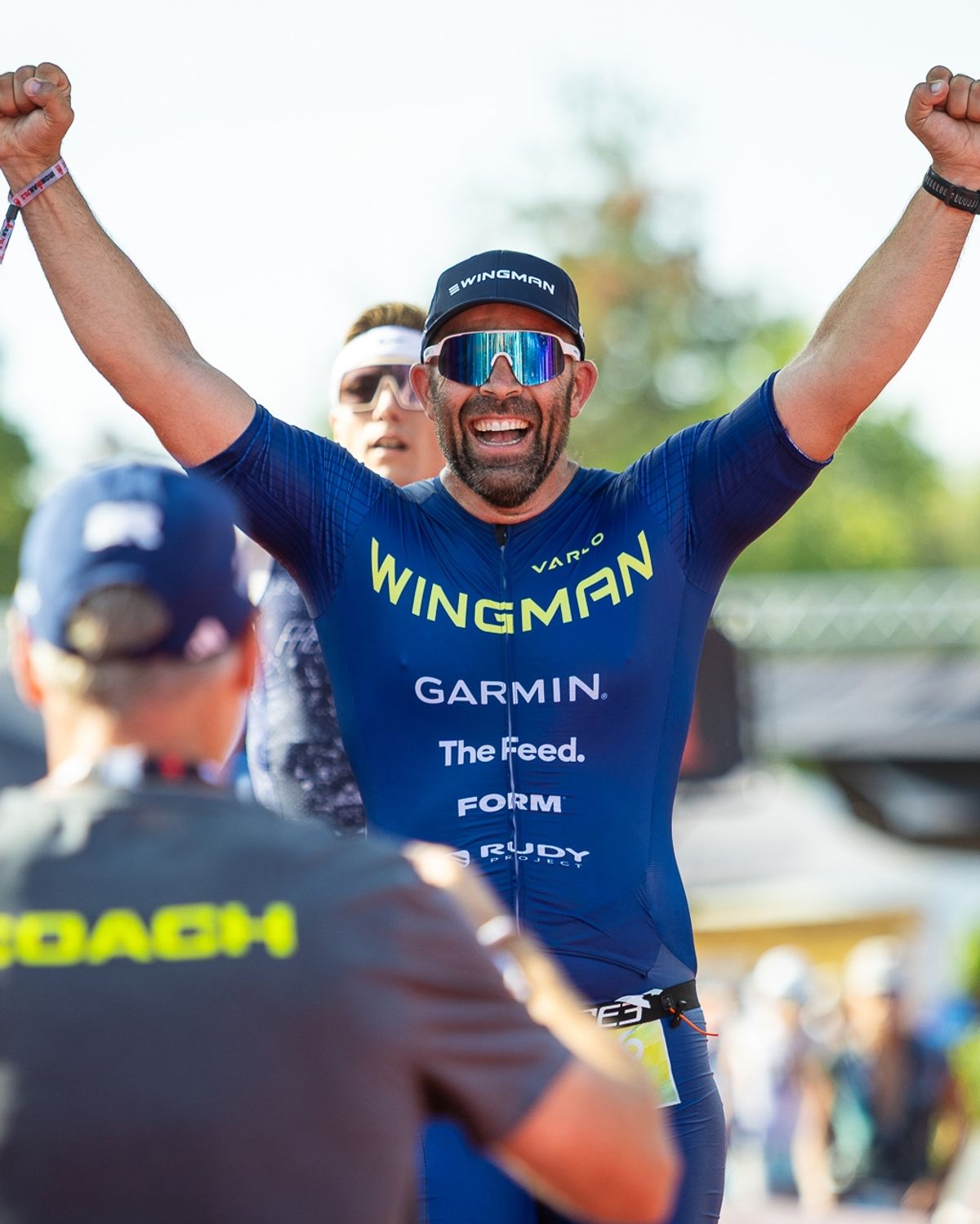
Forty-five weeks from now, this is either a story or a thing you thought about
Coach capacity for Maine is limited. The call costs nothing and commits you to nothing.