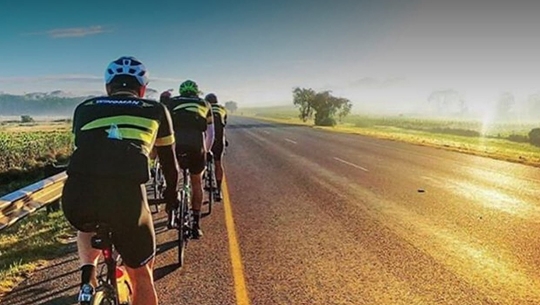
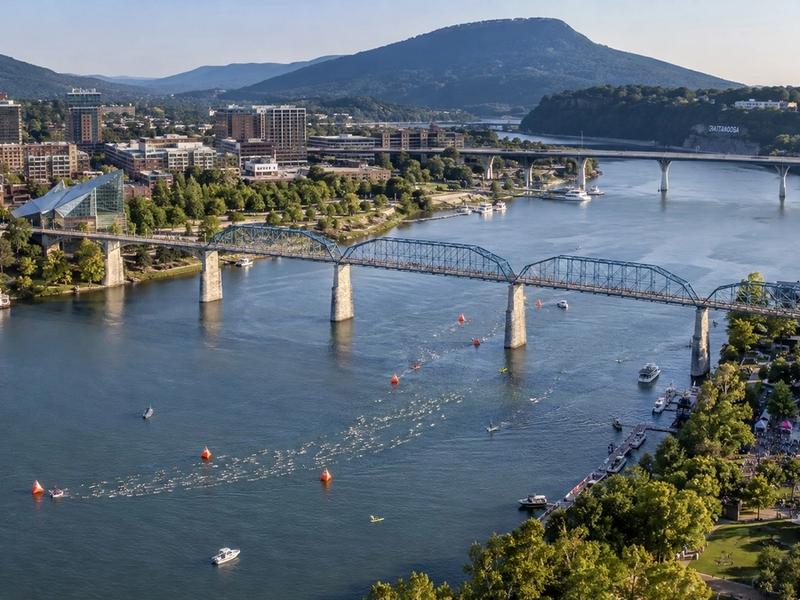
IRONMAN 70.3 Eagleman 2027
Flat is not the same as forgiving.
- Sun 13 June 2027
- Cambridge, Maryland
- 70.3 Miles · 1.2 miles / 56 miles / 31.1 miles
A tidal river swim you can walk into, a bike course with 330 feet of climbing and nowhere to hide from the wind, and a two-lap run in Chesapeake heat that decides the day. One of the oldest half-distance races in America, coached start to finish by Stephan Weyers.
20-week coached programme · starts 25 January
Coached by Stephan Weyers · optional 8-week preseason from 9 November
Written and reviewed by Stephan Weyers, IRONMAN Certified Coach. Last reviewed 2 October.
Key facts
- Swim
- 1.2 miles
Choptank River, brackish and tidal, one rectangular loop, rolling start
Typical water temperature is 74 to 76°F. Wetsuit borderline: the call is made on race morning.
- Bike
- 56 miles
Bike elevation is 330 feet, by the official figure. Athlete devices record 70 to 100 feet. Among the flattest 70.3 bike courses anywhere.
- Run
- 31.1 miles
Run elevation is approximately 80 to 130 feet, or 25 to 40 metres. Flat and exposed.


- 5:30 - 6:30
- Median finish time
- 8%
- DNF rate
- 1, 800 - 2,500
- Field size
- 28
- Total coached weeks
- 8-week preseason plus 20-week race programme
At a glance
IRONMAN 70.3 Eagleman is a half-distance triathlon held each June in Cambridge, Maryland, on the Eastern Shore of Chesapeake Bay. It has run in Cambridge since 1990 and is one of the oldest half-distance triathlons in the United States. The 1.2 mile swim is in the brackish, tidal Choptank River, the 56 mile bike is a single loop through Blackwater National Wildlife Refuge with about 330 feet of climbing, and the 13.1 mile run is two flat, mostly shadeless laps of the Cambridge waterfront. Race-day highs of 86 to 90°F and steady wind make it a personal-best course that punishes poor pacing.
Eagleman is the right race if you want a fast first 70.3 and can respect the heat
You are somewhere between forty and sixty. You run something, people depend on you, and you haven't been properly fit for a while. You want a race with a real name on it and a finish time you are not embarrassed by. Eagleman gives you that, on three conditions.
The course will not slow you down.
No hill on the bike is worth naming, and none on the run. The pro course record is 3 hours 36 minutes, set in 2025 by Sam Long. For an age-group athlete, the terrain is as forgiving as the series gets, which is why it has been called the best course in America to set a personal best.
The weather will, if you let it.
Race-day highs of 86 to 90°F with Chesapeake humidity are normal. In 2008 the heat index reached 109°C. Most age-group athletes run between 10am and 1pm, the hottest part of the day, on a course with almost no shade. Eagleman is decided by heat management, and that is a coachable skill, not a gift.
The wind is the hill.
The bike course crosses open marshland with nothing to break it. Athletes describe 10 to 20 mph as a normal day, usually a tailwind out and a headwind home. On a flat course, you never coast, so the pedalling is constant for 90 km. Your legs will know it on the run.
It is early in the season, on the East Coast, and it has history.
Race founder Gerry Boyle started it in 1990, and the finish park now carries his name. The date, the second Sunday in June, means your hardest weeks are in April and May, in daylight. And for a lot of athletes in the Mid-Atlantic and Northeast, it is a drive, not a flight. How 70.3 training fits around a full diary.
If you want mountains and a medal you climbed for, look at IRONMAN Lake Placid. If you want a fast, flat, well-run first 70.3 and you are prepared to train for the heat, Eagleman is one of the best choices in the country.
The Swim — 1.9 km, Choptank River, tidal
You start from the beach at Gerry Boyle Park at Great Marsh in a self-seeded rolling start, a few athletes every few seconds, from about 5:55 am. The course is normally one rectangular loop, anticlockwise, finishing at the boat ramp, but it is hard to predict: IRONMAN has shortened and amended it on race morning before, so you cannot know the exact layout in advance. The Choptank is brackish, brown and tidal, where the river meets Chesapeake Bay. You will not see your hand in front of you. That is normal here, and it is nothing to worry about.
The first 100 metres are shallow enough to walk. Most athletes do. Near the exit, oyster beds are on the bottom, so swim until your hand touches sand rather than standing up early.
The water is warm, and that is the problem. The average is 74 to 76°F, which sits right at the 24.5°C wetsuit limit. In 2022, the race-morning reading was 24.2°C and wetsuits were allowed. In 2024, they were optional. IRONMAN makes the call on race morning. If it goes above the limit, you can still wear a wetsuit, but you start in the last wave, and you are not eligible for awards or World Championship slots. Bring both a wetsuit and a swimskin, and know your plan for each.
Conditions vary more than the flat map suggests. On a still morning, the river is glass. With wind against the tide, it chops, and in 2019 the swim was cancelled for the first time in the race's history because of rough water. Sea nettles, the Chesapeake jellyfish, are rare in mid-June and become a problem later in the summer.
A warm, choppy, low-visibility swim rewards calm more than speed. Your swim block builds comfort breathing to both sides, sighting every few strokes without lifting your whole head, and swimming in a swimskin as well as a wetsuit so that race morning holds no surprises. If open water is new to you, start with our guide to open-water swimming for nervous beginners.
The Bike — 56 miles through Blackwater National Wildlife Refuge
One loop out of Cambridge on quiet country roads, through Blackwater National Wildlife Refuge, and back. The official climbing figure is 330 feet, athletes' devices usually record less, and the highest point on the course is about 28 feet above sea level. The road surface is excellent, and the traffic is minimal.
There is no climb. There is wind. The refuge is open marshland with nothing to block it. On a typical day, you ride out with a tailwind, feeling like a professional and turn for home into 10 to 20 mph of headwind. Athletes who chased the tailwind pay for it for 40 km.
There is no coasting either. On a rolling course, you get a few seconds of recovery on every descent. Here you pedal every metre of 56 miles. That is a different kind of fatigue, and it shows up at mile 8 of the run.
Two practical notes. The busier return roads have rumble strips, which make passing awkward, so hold your line and be patient. And there is no shade at all, so apply sunscreen before you rack your bike, not after the swim. You can preview the route on Finishers and ride the flat sections indoors in the winter.
What that means for how we train you
Eagleman is a steady-state course. The work is holding one number for two and a half to three hours in aero, with the wind changing and the number not. We set that number from a test, then build long tempo rides at it on the turbo through February and outside from April, holding the aero position for progressively longer. The same logic applies to how we set your heart-rate zones.
The Run — 13.1 miles, two laps, Cambridge waterfront
Two out-and-back laps along the Choptank waterfront and through Cambridge's residential streets, finishing back in Gerry Boyle Park. Climbing is somewhere between 80 and 130 feet, depending on the source. A short stretch of shade runs along Lovers Lane near halfway. The rest is open.
The heat is the course. By the time most age-group athletes start the run, it is late morning, the sun is high, and the temperature is heading past 86°F. The town knows this: residents set up hoses and sprinklers along the route, aid stations are roughly every mile, and there are usually ice and cold sponges. Use all of it. Athletes who run past the sprinklers to save time are the ones walking at mile 10.
Two laps means you see everything twice. The out-and-back layout also means you pass your family and the finish area repeatedly, which is good for morale and bad for pacing if you speed up every time someone shouts your name.
What that means for how we train you
Your run block is built around two things: running at a controlled effort in heat, and the walk-run protocol you will use at aid stations. From April, your long runs move to the warmest part of your day, and in the final six weeks we add specific heat sessions so that race day is not the first time your body has worked in these conditions. How we prepare athletes for heat.
Five things that ruin race day at Eagleman
Every one of these is a coaching problem, not a fitness problem. They are decisions made under fatigue by people who haven't rehearsed them. That rehearsal is most of what you are paying us for.
- 1
Bringing only a wetsuit
The water is within a degree of the limit every year. Athletes who have never swum 1.2 miles in a swimskin find out on race morning that they have to.
- 2
Chasing the tailwind
The outbound leg feels effortless. Every watt you spend above plan on the way out is paid back with interest on the headwind home.
- 3
Treating flat as fast
No coasting on this bike course. Athletes who have only ever trained on rolling roads have never held constant pressure on the pedals for three hours, and their run shows it.
- 4
Running the first lap as if it were cool
It is 78°F at 9 am and 89°C by noon. The first lap sets up the second. Start slower than feels right, take ice at every aid station, and run through every sprinkler.
- 5
Booking accommodation late
Cambridge is small. The host hotel and the town sell out months ahead, and athletes end up 40 minutes away with a 4 am start. Book the hotel the week you book the race.
Your coach: Stephan Weyers
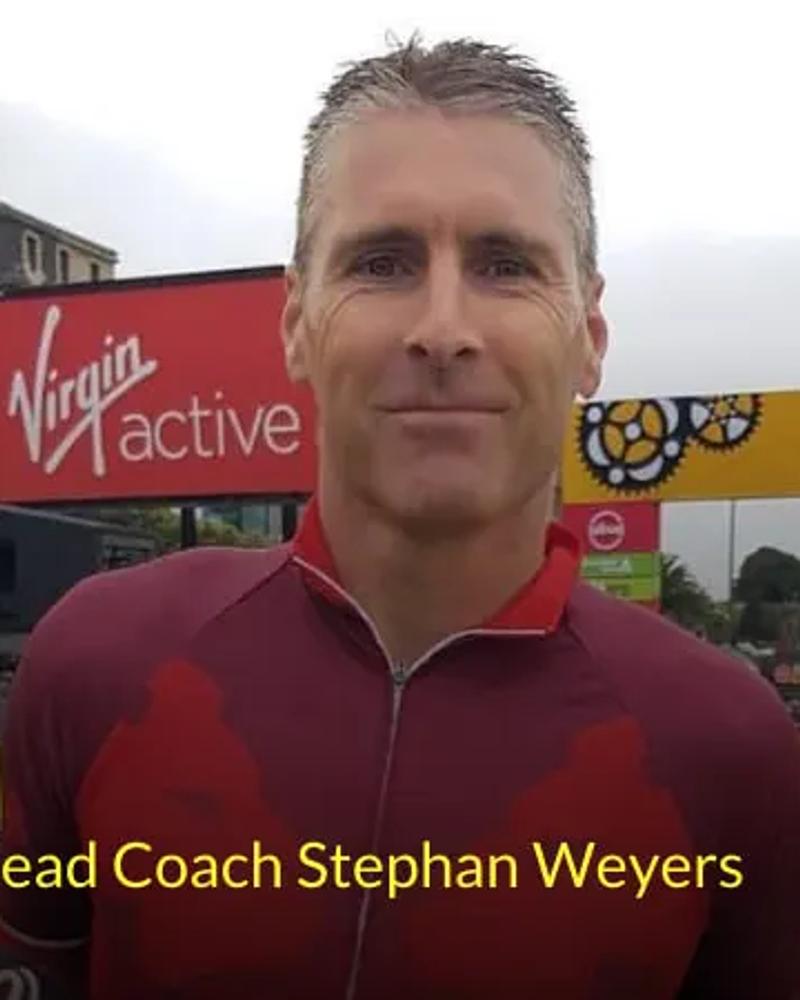
Stephan Weyers is co-founder of Wingman Multisport and an IRONMAN Certified Coach. A sports lawyer by trade, he went from bucket-list Ironman to multiple Ironman finishes, then to coaching.
Stephan combines a data-driven approach with what he learned on his own journey as an amateur athlete. He describes himself as a cheerleader at heart, but firm in approach.
“His line is: “Genetics loads the gun, lifestyle pulls the trigger.””
Why Stephan for Eagleman
He coaches four of the 2027 races, and Eagleman is the one where his data-driven approach earns its keep: a flat course with wind and heat is a pacing and fuelling problem before it is a fitness problem, and those are the numbers he lives in. He also knows what a forty-eight-year-old with a full diary can absorb in a week in March, because he was one.
The programme: 32 coached weeks to 13 June 2027
Every Wingman race follows the same shape: an optional twelve-week preseason to build the base, then a race-specific programme through to race day.
Stage 01
OptionalPreseason: 2 November 2026 to 31 January 2027, twelve weeks
Build the aerobic engine, strength, movement quality, and swim technique from scratch if needed. This is the base-building phase, before intensity increases, when we work on technique, prep the body for what is coming, build leg and core strength, and improve basic mobility. Why the base comes before the load.
Stage 02
Race programme: 25 January to 13 June 2027, twenty weeks
Eagleman-specific: long steady-state rides at your race number, aero-position endurance, swimskin and wetsuit swims in open water from May, run-walk aid-station rehearsal, and six weeks of heat adaptation before race day.
Stage 03
Race week: 7 to 13 June 2027
Taper, travel, a shake-out swim, ride and run with Stephan the day before, a transition walkthrough, and coach support on the course in Cambridge.
The weekly commitment
The weekly commitment. Preseason runs at roughly five to seven hours a week. The race programme peaks at eight to eleven hours a week in April and May, then comes down through the taper. These are minimums, and they depend on where you start. Sessions are built around your actual calendar, not an idealised one.
If you miss a week, the plan adapts. It is rebuilt around what you did, not what you were supposed to do. On Team Wingman, the plan is fitted to your week once, at signup. On Wingman Custom and Wingman One, Stephan reviews your training every day and rebuilds the plan with you. How Wingman's online coaching works.
Three Ways to Train with Wingman
Every tier runs on the same coaching philosophy that has taken 700+ finishers across 15+ countries.
Tier 01
Team Wingman
$195/month
+ $150 onboarding
Your plan, fitted to your week. Train with a cohort chasing the same finish line, with the full Wingman team behind you.
Setup
Welcome pack: cap, race belt, water bottle ($70 value)
Plan Fit Session at signup, plan mapped onto your actual week
Full setup: TrainingPeaks, devices, zones, insurance
Training
Proven Wingman plan via TrainingPeaks
TrainingPeaks Premium account included
Race cohort, training alongside your event
Coaching
Monthly team Zoom call with Stephan and the squad
Wingman WhatsApp community, group messaging
Race course preview and race-week support
Race support in person at official team races
The team
The Wingman Athlete Library: nutrition, race week, travel, data
Early access to the race calendar, race intel archive, finisher graphics
Team kit, store and monthly newsletter
Preferred pricing: Garmin, QR, TheFeed, Form, Rudy Project
Pause without penalty, plus race deferral at no charge
If you do not cross the finish line, I refund your coaching fees. The onboarding fee is not refundable.
Daily coach review of your training
Written performance reports
1:1 coach contact or personalised plan
Swim and run video analysis
Most Popular
Tier 02
Wingman Custom
$345/month
+ $250 onboarding
Your race. Your plan. And a coach in your training every single day.
Everything in Team Wingman, plus
I review your training every day and comment on your workouts
Personalised plan built around your schedule, level and goal race
Training zone management, zones updated as your fitness changes
Test Week at the start to set zones from real data
Integrated strength training
TrainingPeaks Virtual cycling platform
Coaching
Performance report at least every two weeks
Monthly 1:1 call, plus more on demand whenever you need one
Direct 1:1 messaging in TrainingPeaks, 48hr reply
Monthly swim and run video analysis
Season planning and race selection call
Race Day
Personalised nutrition and hydration plan
Personalised race-day pacing plan
Post-race review with coach input
Extras
Real-time tracking, Garmin and wearable sync
Training camp discounts, waitlist priority on Wingman One
Tier 03
Wingman One
$549/month
+ $350 onboarding
My full attention. Fortnightly deep analysis, direct access, ten athletes only.
Everything in Custom, plus
A dedicated coach, yours exclusively
Onboarding call and full tech setup before you start
Full threshold testing, zones built from test data
Coaching
In-depth report at least every two weeks
Fortnightly 1:1 call, plus unlimited calls on demand
My direct WhatsApp, same-day reply in office hours
Unlimited swim and run video analysis
Ongoing custom nutrition coaching
Long Game
Quarterly performance review
Annual season roadmap
Race-day remote support, on-site at team races
Access
Limited to ten athletes at any one time
Our coaching packages cover your training, not your Ironman race ticket. You'll need to buy your race entry separately from the official race organiser.
Eight hours a week, on your terms
You are not going to move to Boulder. You have a business, and children, and a diary that is only partly yours.
Here is what the maths looks like. At the peak of the Eagleman programme you are riding twice on weekdays, early, on a turbo, sixty to ninety minutes; running twice; swimming twice; and giving up one long weekend morning. The long ride is a Saturday, and it is done before most families are properly awake. Eagleman's flat profile has one advantage here: the long rides are steady, not technical, so they suit a turbo when the weather or the diary says so.
What we do with the weeks that go wrong. They will. You will have a week in April where you travel to three cities and train once. When that happens, you tell Stephan, and the plan is rebuilt, not with a guilt trip, and not by cramming the missed sessions into the following week, which is how people get injured. The programme assumes roughly one week in six will not go to plan.
Eagleman with the family
Cambridge is a small Chesapeake town, and race weekend is the biggest thing that happens there all year. Plan early, and it is a good family weekend. Plan late, and it is a logistics exercise.
Getting there
Baltimore-Washington (BWI), Washington Dulles (IAD) and Reagan National (DCA) are all about an hour and a half by car. From Philadelphia it is about two and a half hours; from New York about four. Most athletes drive.
Where to stay
The Hyatt Regency Chesapeake Bay is the host hotel, ten minutes from the park, with pools, a small beach and a race-rate block that goes quickly. Cambridge itself has limited rooms, and they sell out months ahead. Easton is 30 minutes away, Oxford about 25 and St Michaels about 40, and all three are nicer places to spend the rest of the weekend than a hotel car park. The Dorchester County tourism office keeps a current list.
What they do while you race
The run passes the finish park repeatedly, so the family can see you five or six times from one spot with a coffee. Afterwards: the Blackwater refuge for bald eagles and the wildlife drive, the Harriet Tubman Underground Railroad Visitor Centre fifteen minutes south, crab houses on the water, sailing at St. Michaels, and the Chesapeake Bay Maritime Museum. Washington, DC is 90 minutes away for the back half of the week.
The dates that matter
- 9 November 2026
- Preseason starts.
- 2 January 2027
- Preseason ends.
- 25 January 2027
- The race programme starts.
- 7 June 2027
- Race week.
- 13 June 2027
- Race day.
On registration
Eagleman runs fields of 1,800 to 2,500 and has not shown the hard early sell-out behaviour of North Carolina. The accommodation does sell out, and that is the constraint to plan around.
The genuine deadline is the preseason, not the race. Athletes who join after February are compressing 31 weeks into 19, and that is where injuries come from.
Questions people actually ask
Is IRONMAN 70.3 Eagleman wetsuit legal?
Sometimes. The Choptank River averages 74 to 76°F, within a degree of the 76°F limit, and IRONMAN decides on race morning. Wetsuits were allowed in 2022 and 2023 and optional in 2024. If the water is over the limit, you may still wear one, but you start last and are not eligible for awards or World Championship slots. Bring a wetsuit and a swimskin.
How hard is IRONMAN 70.3 Eagleman?
The course is among the flattest in the series, with about 330 feet of climbing on the bike and under 130 on the run. Conditions are not race-day highs of 86 to 89°F, high humidity, little shade, and steady wind across the marsh. The DNF rate was about 8 per cent in 2023, higher than most 70.3s. Fast for well-paced athletes; unforgiving for the rest.
How hot is Eagleman?
Hot. Typical race-day highs are 86 to 89°F, with humidity to match, and most age-group athletes run between 10am and 1pm. The heat index reached 109°C in 2008. Not every year is extreme: 2022 was humid with light rain. Plan for heat and be pleasantly surprised.
How windy is the Eagleman bike course?
Windy enough to be the main difficulty. The course crosses open marshland in Blackwater National Wildlife Refuge with nothing to block the wind, and 10 to 20 mph is normal, typically a tailwind out and a headwind home. Because the course is flat, there is no coasting, so the effort is constant for 56 miles.
What is the elevation gain on the Eagleman bike course?
The official figure is 330 feet. Athletes' GPS devices usually record between 70 and 100 feet, and the highest point on the course is about 28 feet above sea level. Either way, it is one of the flattest 70.3 bike courses anywhere.
Is Eagleman a good first 70.3?
Yes, with one condition. The flat course, excellent organisation and 35 years of history make it a confident first race, and it is a drive rather than a flight for most of the East Coast. The condition is heat: a first-timer who has not trained for 86°F will struggle on the run. Our programme builds heat adaptation over the final six weeks.
Can I stand up in the Eagleman swim?
At the start, yes. The first 100 metres or so are shallow enough to walk, and most athletes do. Near the exit, oyster beds line the river bottom, so keep swimming until your hand touches sand rather than standing early. The water is brown, and visibility is close to zero, which is normal for the Choptank.
Are there jellyfish at Eagleman?
Rarely at race time. Chesapeake sea nettles bloom later in the summer, usually from July, and depend on how salty the water is that year. They are unusual in the Choptank in mid-June. Your coach will pass on the current report in race week.
What is a good time for a first 70.3 at Eagleman?
The largest groups of finishers in 2023 came home between 5:30 and 6:30. For a first-timer starting from a low base with a full coached build, 6:00 to 7:00 is a realistic range on this course, with the heat as the deciding factor. Your coach sets a specific target after your first testing block, not before.
Where should I stay for Eagleman?
The Hyatt Regency Chesapeake Bay in Cambridge is the host hotel and fills first. Cambridge has limited rooms and sells out months ahead. Easton, 30 minutes away, Oxford, 25 minutes, and St. Michaels, 40 minutes, are the alternatives. Book accommodation the same week you register for the race.
Can I train for this while running a business?
Yes, and it is most of what we do. The peak weeks run eight to eleven hours: two early turbo rides, two runs, two swims and two long weekend sessions. Eagleman's flat profile suits turbo training, which helps when the diary is tight. The programme is built around your calendar and rebuilt when your calendar wins.
What happens on the free consultation call?
Twenty minutes with Stephan. Where you are now, honestly. What 13 June 2027 would require. Whether the two of you would work well together. If the answer is no, he will tell you.
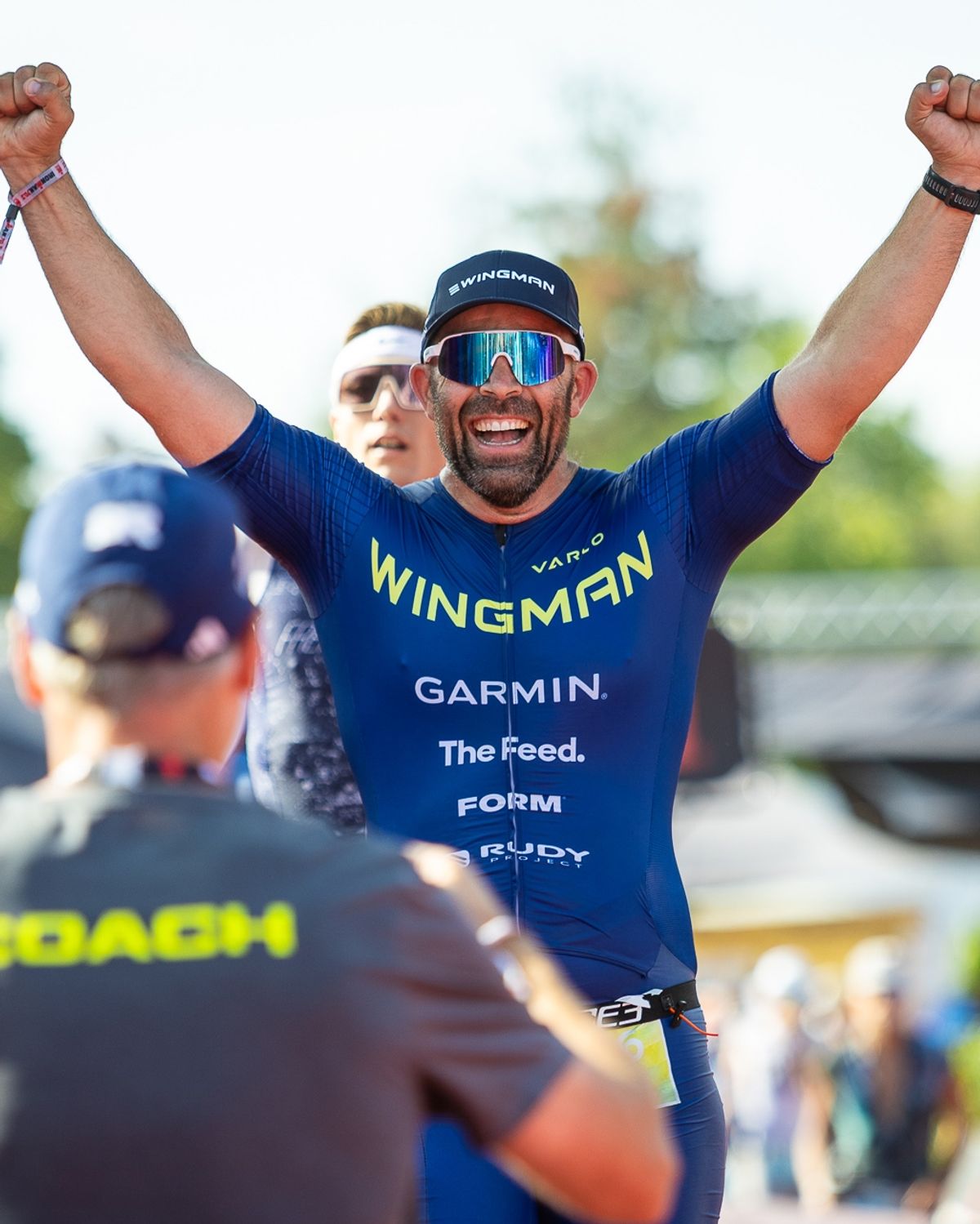
Thirty-nine weeks from now, this is either a story or a thing you thought about
Preseason starts 9 November 2026. Coach capacity for Eagleman is limited. The call costs nothing and requires no commitment.
Not sure Eagleman is the right race?
Have a look at these.