
Let me paint you a picture.
Fit guy. Successful. Probably runs his own company or sits on a board. He has done the gym, knocked out a few half marathons, and somewhere between his 45th birthday and a conversation he probably wishes he had never started, he signed up for a triathlon.
The swim leg? He figured he would sort that out later.
Later is here. And open water is nothing like the pool.
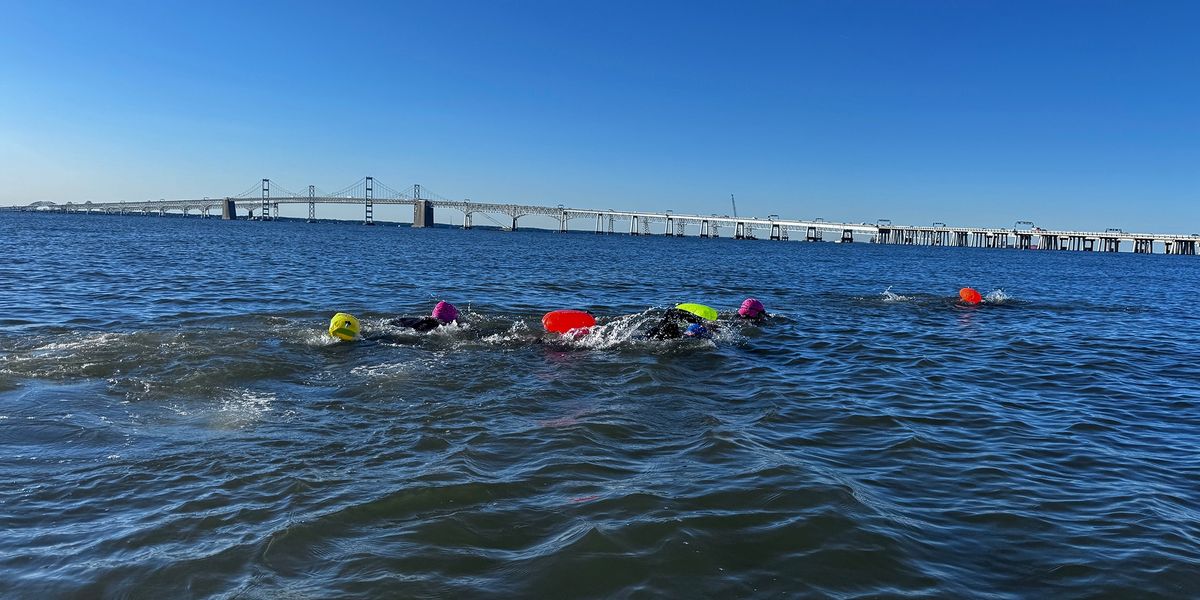
No lane lines. No wall to grab. No clock and no bottom you can see. No lifeguard. Just a mass of churning water, a distant buoy, and a heart rate that has absolutely no interest in cooperating.
This is the moment I see most first-timers quietly consider quitting before they have even started. And honestly? It is also the moment where my job as a coach gets really interesting.
The Pool Lied to You
Here is something nobody tells you when you start swimming in a pool: the pool is lying to you.
It tells you that swimming is about fitness and technique. About your stroke rate and your flip turns and hitting the wall clean. It is a controlled environment with a predictable answer to every question.
Open water does not do that.
In open water, you must navigate. You must manage a tight wetsuit, heart rate that spikes the moment cold water hits your face. You must breathe on both sides because the choppy water could not care less which side you prefer. And you must do all of this without a single visual reference point beneath you.
For a midlife executive who is used to being competent, who has built a career on being the most prepared person in the room, that loss of control is deeply uncomfortable. Not just physically. Psychologically.
That is where I start.
The First Thing I Coach Is Not Technique
When I run the first session of WOW, our Wingman Open Water series, I do not open with a technique clinic. I do not stand on the shore talking about catch position or hip rotation.
I talk about the nervous system.
That spike in heart rate when you hit cold open water? That is your body triggering a genuine threat response. It is primal, it is involuntary, and it has nothing to do with how fit you are. A 40-year-old CEO and a college swim team dropout will both feel it. The water does not discriminate.
The antidote is not courage. It is familiarity.
Week 1, we get in and we swim easy. Not training-easy. EASY. 60 to 65 percent effort. The goal is deceptively simple: finish a full 1,500-yard loop and prove to yourself that nothing bad happens. We sight off fixed landmarks on shore, we breathe, and we let the nervous system start updating its threat assessment.
We also time every athlete on that first swim. Not to compare. Not to judge. That number becomes their baseline, and it matters a whole lot more in Week 5 than it does today.
How to Sight Without Panicking
The second biggest fear after "something is going to touch my feet" is going off course.
Most open water swimmers drift 10 to 20 percent off course without ever noticing. In a race, that is free extra yardage nobody signed up for. For a newbie, it is also deeply unsettling, that creeping feeling that you have no idea where you are going.
The fix is a technique called Crocodile Eyes.
Instead of lifting your whole head to sight, which kills your body position and adds drag, you lift only your eyes just above the waterline. Two strokes, eyes up, lock the landmark, back down. The whole thing takes less than a second and once it is drilled properly, it does not interrupt your rhythm at all.
It sounds like a small adjustment. It changes everything.
Athletes who could not swim a straight line in Week 1 are navigating clean loops by Week 2. That competence, that feeling of being in control of where you are going, does something to a person's confidence that no amount of pool yardage ever could.
The Adrenaline Problem Every Beginner Faces
Here is something I see at almost every race: an executive athlete who has trained seriously for months goes out in the first 200 yards at 110 percent effort because the energy is electric and completely blows up before the first buoy.
Adrenaline is a liar. And in open water, it is an expensive one.
In Week 3 of WOW, we train specifically against that instinct. The protocol is a negative split: first 500 yards at 65 percent effort, middle 500 at 75 percent, final 500 at 80 to 85 percent. Building through the swim rather than burning through it in the first few minutes.
When we compare Week 3 times to Week 1 baselines, the improvements are not from extra fitness. Same athletes. Same course. Three weeks later. The gains come almost entirely from pacing better and executing smarter.
For the executive athlete, this lands immediately. These are people who optimize systems for a living. Once they understand that pacing is a genuine performance variable and not just a comfort preference, they take it seriously in a way that changes their racing fast.
Training for When Things Go Wrong
This is my favorite week to coach.
Week 4 of WOW is what I privately call Survival Skills. I do not frame it that way to the athletes, because nobody shows up excited to feel like they are in a crisis management drill. But that is exactly what it is.
We flood goggles deliberately. We stop mid-swim, tread water for 30 seconds, regulate our breathing, and restart. We talk out loud as a group about what goes through your head when something unexpected happens in the water.
Because here is the truth that separates athletes who finish from athletes who panic: race day always has an unscripted moment. A calf cramp at 800 yards. A kick to the face at the start. Goggles that leak from the very first stroke. These are not edge cases. They are standard open water events that happen to real people at real races every weekend.
The athlete who has practiced a calm response to chaos is the one who keeps swimming. The one who has not is the one on the kayak rescue board wondering what went wrong.
I call it training the brain, not just the body. For executives, it resonates immediately, managing composure under pressure is something they have been doing for decades. We are just applying that same skill to a new and slightly wetter environment.
What Five Weeks of Open Water Training Actually Does
By the time WOW athletes reach Week 5, a full race simulation at race pace in race gear, something has visibly shifted. Not just in their times, though those improve significantly. In how they carry themselves before they even get in the water.
The nervous energy of Week 1 is gone. The tentative entry, the wide eyes scanning the course, the slightly too-tight grip on the goggles. All gone.
What replaces it is quiet confidence. The kind that only comes from having done something repeatedly until your brain stops filing it under "threat."
That, more than any drill or pacing protocol, is what I am actually coaching toward. Because on race day, you do not rise to the level of your fitness. You fall to the level of your preparation.
And if you have prepared for the chaos, the cold, the claustrophobia, and the missing lane lines, you are already well ahead of most of the field before the gun goes off.
Ready to Get Started?
If open water swimming has always felt like the part of triathlon you are hoping to just survive, you are not alone. And you are not stuck.
What you need is not more laps in the pool. You need progressive, structured exposure to the real environment, with a coach who understands that your nervous system needs as much training as your aerobic base.
That is what WOW was built for.

Written by
Stephan Weyers
Wingman Co-founder
Stephan is the Co-Founder of Wingman Multisport specialising in online coaching. A Sports Lawyer by trade, avid adventurer and entrepreneur. His multisport journey took him from Ironman “bucket list” wanna-be-athlete to multiple Ironman finishes, to coach. His enthusiasm and passion for the sport is contagious, from sign up right through to post finish line.
Train with a Wingman coach
Get a plan built around your schedule, your goals and your next race.
Find your coach