
I coached Bob Skinstad as part of our group heading to Ironman 70.3 Vichy. Bob's a former Springbok captain, World Cup winner, serial entrepreneur, and broadcaster, the kind of resume that should come with a built-in excuse to skip training. At the end of his race plan for his first triathlon, I added a note. Not the usual direction, the other way around. I wanted him to know that I, the coach, had learned something from him. Because Bob had the most brutal, chaotic, unpredictable schedule of any athlete I've worked with, and he was still one of the most compliant. He didn't have more time than you. He just refused to let "busy" be the excuse.
That's the myth I want to blow up today. The idea that finding an hour to train is a scheduling problem. It's not. It's a design problem, and once you see it that way, everything changes.
The science backs the shortcuts
For years the fitness industry sold you the idea that unless you're doing a continuous 45-to-60-minute session, you're wasting your time. Turns out that's mostly marketing, not physiology. A 2026 meta-analysis of eleven randomized controlled trials found that "exercise snacks," short bouts of movement lasting five minutes or less done a few times a day, produced cardiorespiratory fitness gains comparable to structured high-intensity interval training. Comparable. With a fraction of the total volume.
Even more interesting for you specifically: adherence in these studies was consistently higher than in traditional continuous training protocols. Translation, the shorter, more flexible approach isn't just physiologically sound, it's the one you'll actually stick to. Which, if you've ever bought a gym membership in January and quietly cancelled it by May, should sound familiar.
So no, three properly executed 20-minute sessions aren't a consolation prize for missing your "real" workout. They might genuinely be the smarter play.
Design your environment so the decision is already made
The single biggest lever isn't willpower, it's friction. Every extra decision you must make before training, where's my gear, is there a gym nearby, do I have time to drive there, is a chance for the day to win. Take the decisions off the table in advance.
I keep my truck loaded with training kit. Jump rope, resistance bands, a kettlebell, a rucksack. When my kids are warming up for their own sport, I'm not scrolling on the sideline, I'm getting a session in ten feet away, next to the car or looping the neighborhood.
Travelling for business? Most people assume you can't bring 60 pounds of plates through TSA. Correct. So don't. I have play sand delivered to the hotel ahead of time from a Lowe's or Home Depot near the property, less than $8 for 50lb, done. Pair that with a rucksack that doubles as your laptop bag and you've quietly turned a business trip into a training camp.
And before you even book the trip, check what the hotel offers, gym, pool, safe roads for a run, so your coach can build the week around reality instead of hope.
Stack it into what's already happening
This is where habit stacking earns its keep. Not as a productivity buzzword, just a way to attach training to something you're doing anyway.
Flip van der Merwe, one of my long-time athletes, will happily rack up 10 kilometers walking laps of an airport terminal during a layover instead of parked at the gate. Waiting is waiting either way, might as well make it count. I do the same thing on family days, running while my kids play soccer nearby with the occasional referee break required, or having them trail me on their mountain bikes while I run trails. Nobody misses out. Nobody has to choose between dad and training.
Walking meetings work the same way. A stroll around the block with your team, or better yet, an actual three mile run with a client or colleague, gets the conversation and the cardio done at once. Try scheduling that instead of another conference room meeting and watch what happens to the quality of the discussion.
Train in the gaps, not instead of life
Some of this requires a level of commitment most people will read and quietly decide isn't for them. Good. That's exactly why it works as a differentiator. I once had a family wedding three hours away. My wife drove the kids. I cycled there and back. On easier Sundays, wine farm lunches nearby, I'll cycle out, shower at a gym close to the farm, and have the family swing by to pick me up in time to sit down at the table, present, showered, and already trained. Nobody at that lunch would have guessed I'd just ridden 50 miles.
Family holidays get the same treatment. I'll head out for a run an hour before the tennis match or the golf game starts, or lean on the resort's kids club the same way I leaned on that gym near the wine farm. The trip stays a trip. The training doesn't disappear, it just moves into the gaps.
And for the days where even that feels like too much, the fallback is brutal and simple: bodyweight circuits that can put you on your backside in fifteen minutes, no equipment, no excuse. Sprinkle in a few sets of squats next to your desk between calls (yes, people will stare, and yes, eventually the whole floor starts copying you) and you've moved your body without breaking a sweat before your next Zoom.
None of this is about finding more hours
It's about refusing to accept that training and everything else are competing for the same block of time. They're not. You just have to stop treating movement as something that only counts when it looks like a proper workout.
Bob didn't have a lighter schedule than you. He just decided, every single day, that his schedule wasn't a good enough reason to skip. That's really the whole system.
Written by
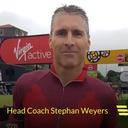
Stephan Weyers
Wingman Co-founder
Stephan is the Co-Founder of Wingman Multisport specialising in online coaching. A Sports Lawyer by trade, avid adventurer and entrepreneur. His multisport journey took him from Ironman “bucket list” wanna-be-athlete to multiple Ironman finishes, to coach. His enthusiasm and passion for the sport is contagious, from sign up right through to post finish line.
Train with a Wingman coach
Get a plan built around your schedule, your goals and your next race.
Find your coach